


SDP journal
Signs of Sludge in Your Heating System
The heating has come on for autumn, but the house takes an age to warm up and one or two radiators never seem to get properly hot. That’s often sludge. The tell-tale signs are radiators cold at the bottom, black water when you bleed them, a noisy boiler and heating that’s slower than it used to be. Sludge doesn’t clear itself, and in Canterbury and across East Kent it’s one of the most common reasons heating systems struggle. Our power flushing page explains how we clean systems out.
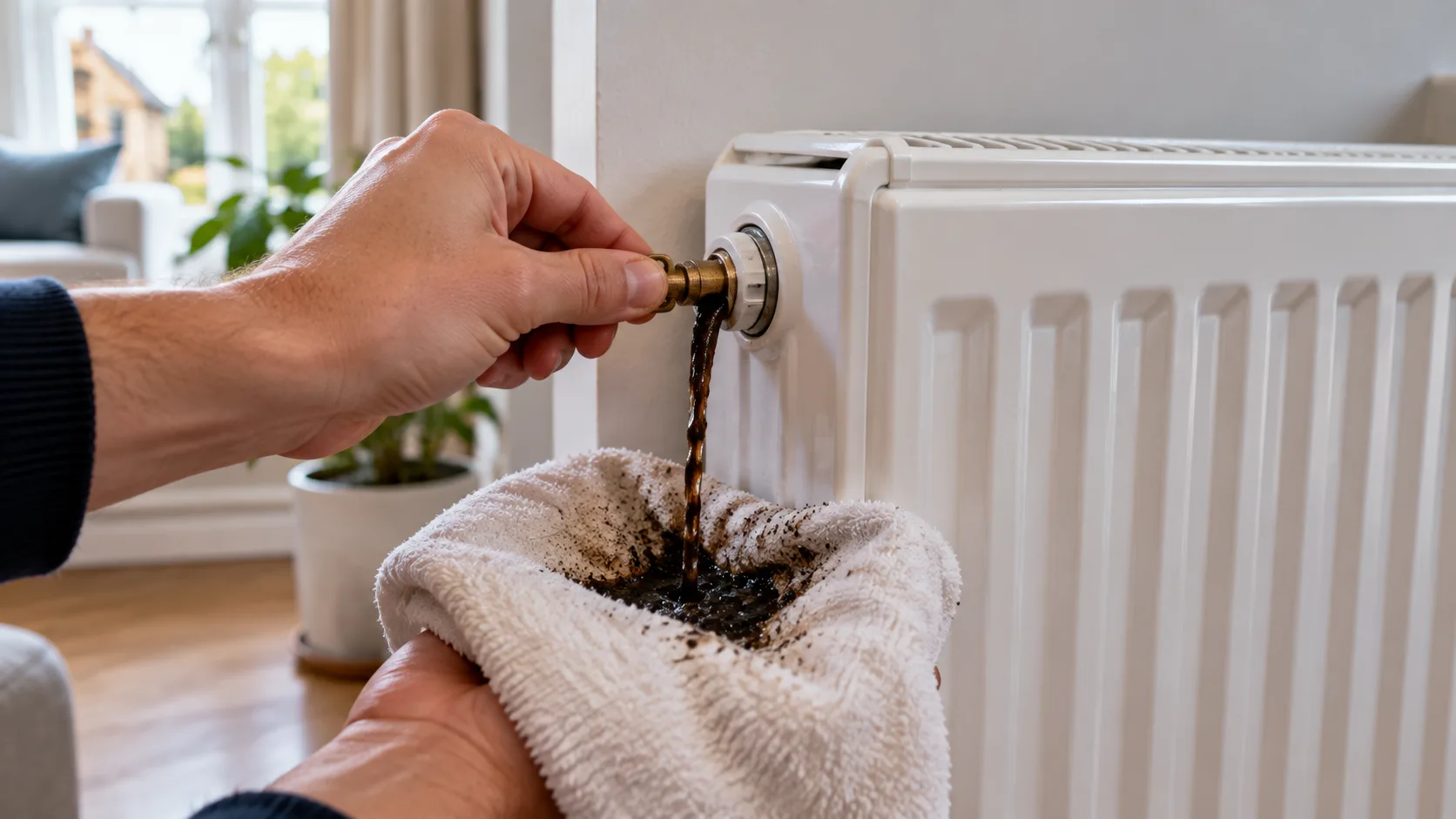
What heating sludge is
Most central heating systems have steel radiators and copper or steel pipework. Over time, the water inside reacts with the metal and corrosion forms a black, muddy deposit called magnetite. Limescale, debris left from installation work and old flux can add to it.
The sludge is heavy, so it settles in the lowest points of the system: the bottom of radiators, low pipe runs and the boiler’s heat exchanger.
The signs to look for
Radiators cold at the bottom
A radiator that’s warm at the top and cold along the bottom is the classic sign. Sludge has settled inside and hot water can’t flow through the lower part.
Dark water when you bleed a radiator
Bleeding a radiator should release air and then clear water. If the water comes out black or brown, there’s corrosion and debris in the system.
Radiators that take a long time to heat
If the system takes much longer to warm the house than it used to, sludge may be restricting flow through the pipes and radiators.
A noisy boiler
Kettling, rumbling or whistling from the boiler often means flow through the heat exchanger is restricted. Sludge is a common cause, along with limescale.
Frequent boiler faults or a failed pump
Sludge strains the pump and can block small passages in the boiler. Repeated overheating faults, pump failures or blocked diverter valves can all trace back to dirty system water.
Cold spots after bleeding
If bleeding doesn’t fix a cold radiator, the problem isn’t air.
Why it matters
Sludge makes the system work harder for the same heat, which means higher running costs and a less comfortable home. It also shortens the life of the boiler, pump and valves. Most boiler manufacturers expect the system to be cleaned and protected when a new boiler is fitted, and a dirty system can affect the warranty.
How sludge is cleared
The right approach depends on how bad it is and what the system is like.
- A chemical clean circulates a cleaning product through the system with the boiler running, then drains and refills it.
- A powerflush uses a pump to push water and cleaning chemicals through the system at high flow, working through each radiator in turn. It’s usually recommended for heavily sludged systems.
- Removing and flushing individual radiators can work for one or two badly affected radiators.
After cleaning, the engineer adds inhibitor to the water to slow future corrosion, and may recommend a magnetic system filter to catch any magnetite that forms.
Heating systems in Canterbury and East Kent
Many homes around Canterbury, Whitstable and Herne Bay have heating systems that have been extended and altered over decades, with older radiators connected to a newer boiler. East Kent is also a hard water area, so limescale can add to the problem. If you’re planning a new boiler, the condition of the system water is one of the first things worth checking.
Frequently asked questions
Can I get rid of heating sludge myself?
You can bleed radiators and add inhibitor, but clearing established sludge properly needs the right equipment and knowledge of the system. Draining and refilling the wrong way can introduce air and make things worse. It’s best to have an engineer assess and clean it.
How often does a heating system need cleaning?
There’s no fixed interval. A well-protected system with the right inhibitor level and a magnetic filter may never need a full flush. Older systems, or ones that have been drained and refilled several times, may need cleaning when symptoms appear or before a new boiler.
Does a magnetic filter stop sludge?
It doesn’t stop corrosion, but it catches magnetite as it circulates, before it can settle in radiators or the boiler. Combined with inhibitor and an annual check, it’s one of the most effective ways to keep the system clean after it has been flushed.
Think your system’s full of sludge?
If your radiators are cold at the bottom or the boiler has started kettling, give us a call on 01227 200 596 or drop us a message and we’ll check the system water and tell you what it needs.