
If you live in Canterbury or the surrounding areas and your boiler suddenly starts playing up, you’ll know how quickly it goes from being a small annoyance to a real headache. One minute you’re making a cup of tea, the next you’ve got no hot water and the house is turning cold. We speak to homeowners every week who’ve noticed a strange noise, a flashing fault code or a pressure drop and aren’t sure what it means or whether it’s serious.
The good news is that most boiler issues follow a pattern. Once you understand the common faults and what causes them, it becomes much easier to decide whether it’s a simple fix or time to call for a professional boiler repair in Canterbury. Below, I’ll walk you through the issues we see most often and what usually happens next.
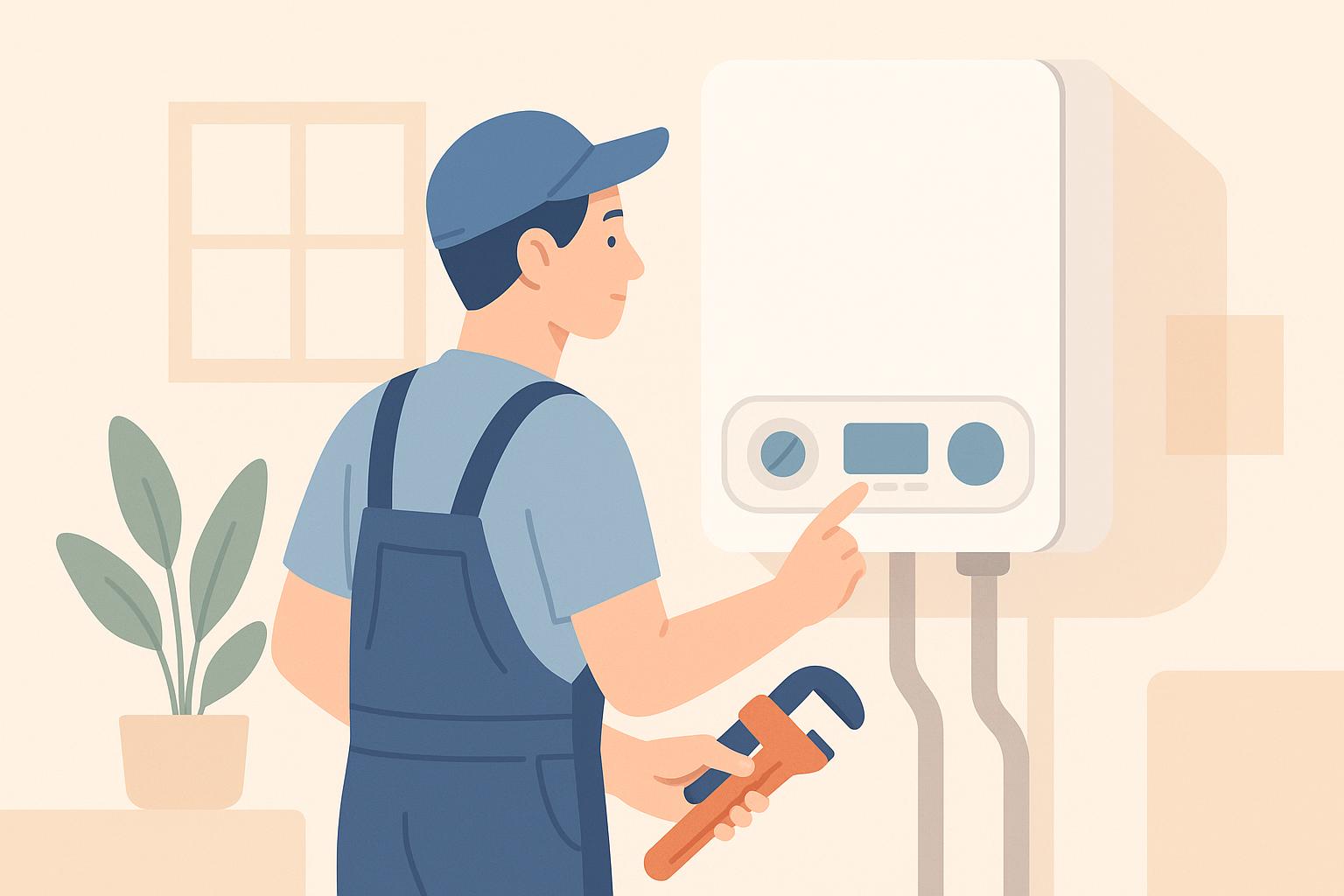
Common boiler faults
Over the years, we’ve worked on everything from modern combis in city centre flats to older system boilers in family homes around the outskirts of Canterbury. While every property is different, the faults themselves tend to repeat.
No heating or hot water
This is the one that gets people ringing straight away, especially in winter. If you’ve got neither heating nor hot water, start with the basics. Check the thermostat is set correctly and has working batteries if it’s wireless. It sounds obvious, but we’ve genuinely had call-outs sorted by switching a thermostat back on after it was knocked accidentally.
If that’s not the issue, it could be low boiler pressure, a faulty pump or a problem with the diverter valve on a combi boiler. In older properties around Canterbury with ageing systems, pumps can become noisy before they fail completely. A grinding or humming sound is often the early warning.
Low boiler pressure
This is one of the most common questions we’re asked. “Why does my boiler keep losing pressure?” You’ll usually spot it on the pressure gauge at the front. For most systems, it should sit between 1 and 1.5 bar when cold.
Low pressure can be caused by a small leak somewhere in the system, recently bled radiators or a failing expansion vessel. Topping up the pressure using the filling loop might get you going again temporarily, but if it keeps dropping there’s an underlying issue that needs attention. Repeatedly refilling without fixing the cause can damage components over time.
Boiler making unusual noises
A healthy boiler should be fairly quiet, just a low hum when firing up. If you’re hearing banging, whistling or gurgling, that’s worth investigating.
- Banging can point to kettling, caused by limescale or sludge restricting water flow in the heat exchanger.
- Whistling may be trapped air or pressure issues.
- Gurgling often suggests air in the system.
In parts of Canterbury and the surrounding villages, hard water is a factor. Over time, limescale build-up can reduce efficiency and lead to overheating inside the boiler. A proper system clean or magnetic filter can make a noticeable difference.
Radiators not heating up properly
If some radiators are cold at the top or bottom while others are fine, it’s not always the boiler itself at fault. Cold at the top usually means trapped air, which can be resolved by bleeding the radiator. Cold at the bottom often indicates sludge build-up.
We’ve visited homes where customers thought they needed a full boiler replacement, when in fact the issue was a heavily sludged system that hadn’t been cleaned in years. A powerflush or chemical clean restored full heat without major disruption.
Boiler keeps switching off
This can be frustrating because it may reset and work again for a while. Common causes include low water pressure, thermostat issues, blocked condensate pipes or overheating due to poor circulation.
Frozen condensate pipes are something we see during cold snaps. The pipe that runs outside can freeze, causing the boiler to lock out. It’s sometimes possible to thaw it carefully with warm water, but if in doubt it’s safer to get it checked properly.
How the boiler repair process works
When you book a boiler repair, most homeowners want to know what to expect. Will it take all day? Will parts need ordering? Is it going to be messy?
In most cases, the process is straightforward and far less disruptive than people imagine.
Step one: Initial checks and diagnosis
We begin with a full set of checks. That includes boiler pressure, fault codes, electrical connections, gas supply and visible pipework. Modern boilers often display error codes which help narrow things down, but they don’t tell the whole story. Two boilers with the same code can have different underlying causes.
We’ll also ask what you’ve noticed. Has the pressure been dropping over weeks, or did it fail suddenly? Did you hear a noise beforehand? Those small details often point us in the right direction.
Step two: Explaining the issue clearly
Once we’ve identified the fault, we explain it in plain English. No technical waffle. If it’s a worn-out part, we’ll show you. If it’s safe to repair, we’ll proceed. If the boiler is older and parts are obsolete, we’ll be honest about that too.
Quite often, especially with boilers under ten years old, a targeted repair is all that’s needed. Sensors, pumps, valves and fans are all replaceable components. There’s no need to replace an entire boiler for a single faulty part.
Step three: Repair and safety checks
After the repair, we test the system properly. That means checking for gas tightness, ensuring correct combustion where required and making sure the boiler cycles on and off as it should. We’ll also check radiators are heating evenly and pressure is stable.
If there’s anything you can do to prevent the issue happening again, we’ll let you know. That might be arranging a service if it’s overdue or fitting a filter to reduce sludge build-up.
When to call rather than wait
There are certain situations where you shouldn’t delay. If you smell gas, switch the boiler off and contact the National Gas Emergency Service straight away. If your carbon monoxide alarm sounds, get out of the property and seek help.
For ongoing pressure loss, repeated lockouts or strange noises that are getting worse, it’s better to deal with them early. Small faults have a habit of turning into bigger ones at the worst possible time, usually when you need the heating most.
At SDP Plumbing & Heating Ltd, we spend a lot of time helping homeowners understand what’s actually going on with their heating systems. If you’re in Canterbury, Herne Bay or Whitstable and you’re dealing with an unreliable boiler, don’t ignore it and hope for the best. SDP Plumbing & Heating Ltd provides straightforward, local boiler repair with clear advice and proper fixes. If your heating isn’t behaving as it should, now’s the time to act. Book boiler repair
